
Our Victories at the Capitol
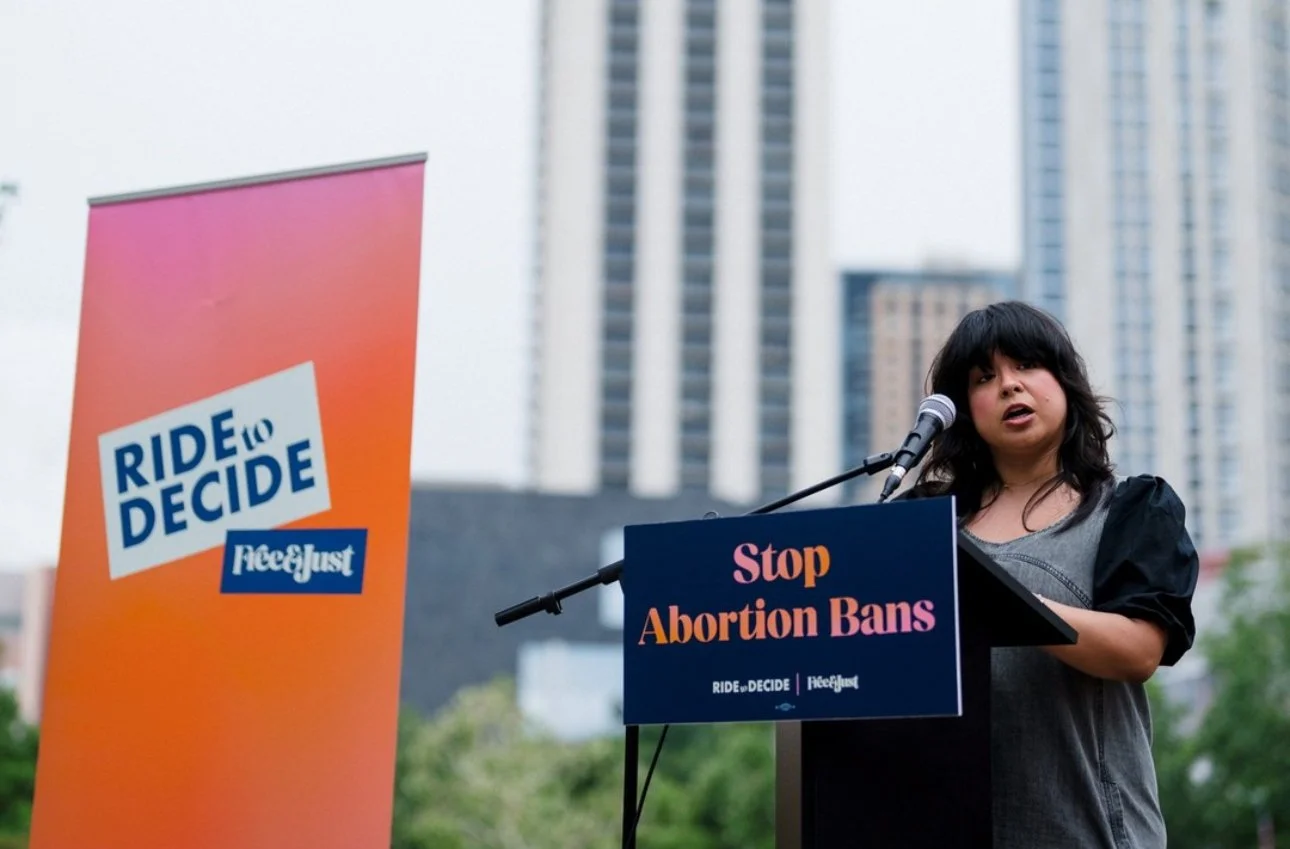
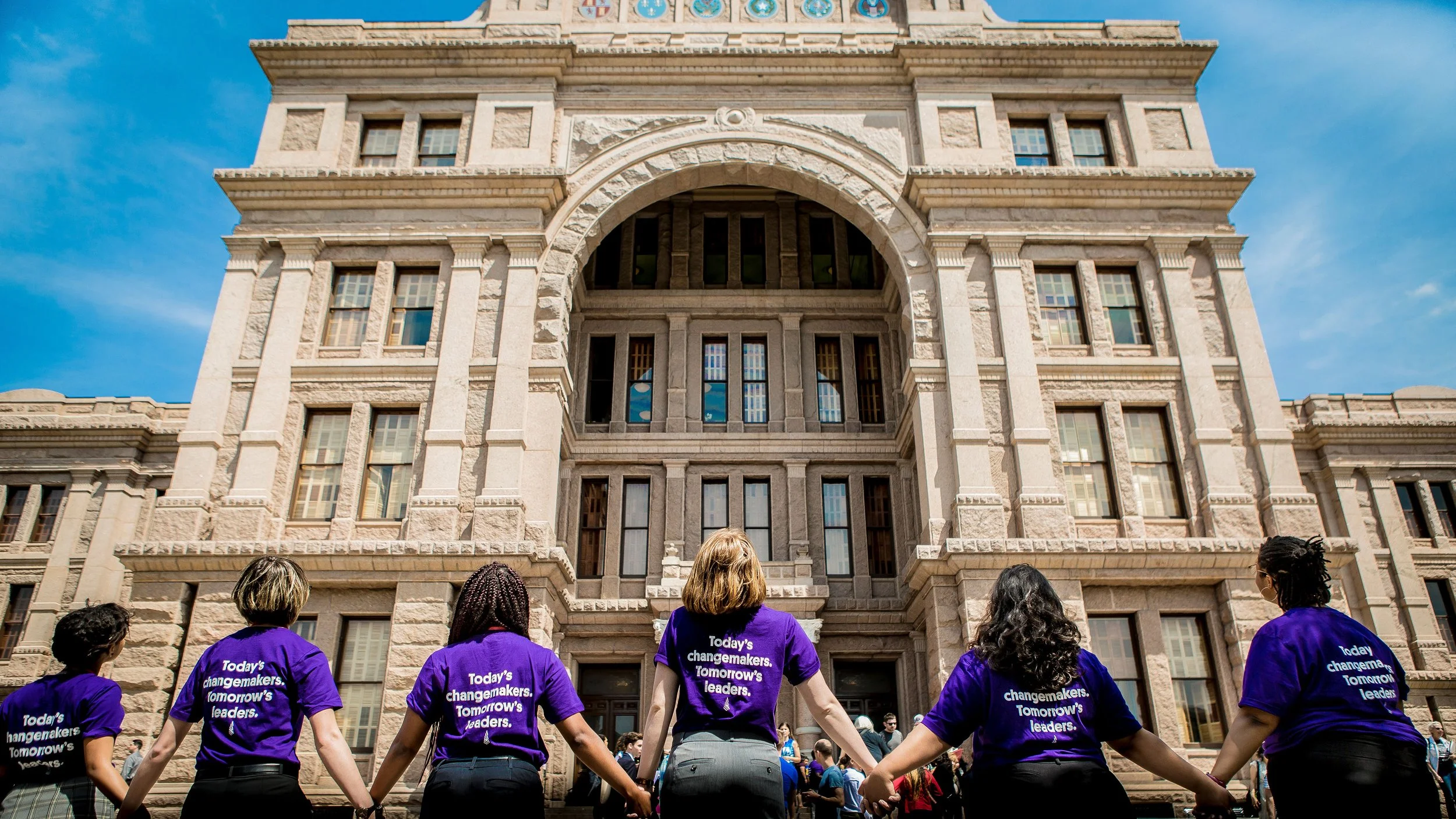
Unique to our efforts is the sustainability of our training. Rather than helicoptering in with a one-time training and resulting lobby day, we support our young changemakers throughout the legislative process from start to finish, and we continue our training and support for them beyond the legislative session. Our goal is that a young person sees halls of power as accessible and inclusive to them, because we believe that when a young person begins to see themselves in these spaces, that is when radical change can happen for our State.
Their success speaks for itself. We have given over 140 testimonies at the Capitol. 67% of which are from young women of color. We’ve converted 34 bills into State law and passed 3 city resolutions. Since the launch of our Changemaker program, we have trained over 500 young people on majority-minority high school and college campuses, and we’ve continued our support and opportunities for activism with them and mobilized over 300 young advocates to our Deeds Lobby Days at the Capitol.
2025 Legislative Victories
-
During the 89th legislative session, our lawmakers introduced four anti-LGBTQIA+ bills. We helped defeat two out of the four. Those are: SB 18 + 400. SB 18 would have denied public funding to any library that hosts a drag read. SB 400 would have given parents control over what student resources are available in schools. Such as students needing a counselor. This would have harmed students in unsafe households due to parents unaccepting of their sexual orientation, gender identity, and beliefs.
-
After a waiting period from the previous 88th legislative session and its four special sessions, where Governor Greg Abbott tried to push school vouchers on Texans, we defeated the bill HB 3. However, its companion bill, SB 2, passed. Meaning school vouchers now take our public tax dollars and give them to private schools. It results in less funding for our public schools, fewer resources for students, and less accountability for how our money is spent.
Companion bills are two identical bills that are introduced in the Senate and in the House. They have two chances to advance through the chambers.
For Black, Brown, disabled, and low-income students, this could mean even fewer opportunities. Vouchers take resources away from the schools that serve the vast majority of students—especially in rural areas and communities of color—while private schools can pick and choose who they admit, leaving many families behind.
-
After a confusing battle during the 89th Texas legislature, we helped defeat HB 44. However, its companion bill, SB 31, passed.
Companion bills are two identical bills that are introduced in the Senate and in the House. They have two chances to advance through the chambers.
These bills claim that it helps doctors, but it doesn’t. It doesn’t protect patients in serious medical situations and adds more paperwork that could slow down emergency care. Even worse, it might help bring back old laws that would punish people for needing abortion care. It was designed to confuse, delay, and harm Texans.
-
Rosie’s Law was initially introduced by Frontera Fund, Lilith Fund, and TEA Fund in 2019 as a bill. Since then, reproductive justice organizations like Deeds Not Words have been in support of Rosie’s Law. While the bill did not pass in 2025, we continue to support Rosie’s Law.
Rosie’s Law would Rosie’s law would require Medicaid, private insurance plans, and federal health insurance marketplace plans to:
Provide coverage for legal abortion care without cost-sharing requirements;
Provide coverage for all forms of contraception approved by the FDA–including sterilization and emergency contraception, for contraception options and pain and anxiety management counseling, as well as for birth control device insertion and removal, and for pain and anxiety management associated with device insertion or removal. It would also prohibit cost-sharing requirements or utilization control techniques.
2023 Legislative Victories
-
SB 2 would have convicted people of illegal voting if they knew they had made simple mistakes. This would have done more harm for understandable mistakes for Texans turning of voting age, elderly people with disabilities, and more.
-
SB 559 falls under the “religious refusal” category of bills, which would have allowed individuals and businesses with “sincerely held religious beliefs or “moral objections” to discriminate against LGBTQIA+ people when providing goods and services.
-
SB 379 means that Texans will no longer pay the sales tax on menstrual products, diapers, and other family products. A huge win for gender equity! This ended the tampon tax, also known as the pink tax.
-
SB 1195 would have allowed the Attorney General to prosecute those who perform abortions or prescribe medication abortion pills, even if the District Attorney declines to prosecute.
-
In a long battle of four special sessions, Governor Greg Abbott called to push SB 1, which was the school voucher bill. SB 1 would have removed public school funding and allocated it to private institutions. Special sessions can last no longer than 30 days and are limited to the topics designated by the Governor
2021 Legislative Victories
-
Due to the COVID-19 pandemic, changemakers fought for virtual testimony during the 87th legislative session. Soon enough, virtual testimony was open to all Texans, no matter where they resided in the state. Though after the pandemic, our lawmakers closed virtual testimony. We still demand access. It is a right for everyone to participate in testifying, not just Austin folx who reside close to the Texas Capitol.
-
Rosie’s Law was initially introduced by Frontera Fund, Lilith Fund, and TEA Fund in 2019 as a bill. Since then, reproductive justice organizations like Deeds Not Words have been in support of Rosie’s Law. While the bill did not pass in 2021, we continue to support Rosie’s Law.
Rosie’s Law would Rosie’s law would require Medicaid, private insurance plans, and federal health insurance marketplace plans to:
Provide coverage for legal abortion care without cost-sharing requirements;
Provide coverage for all forms of contraception approved by the FDA–including sterilization and emergency contraception, for contraception options and pain and anxiety management counseling, as well as for birth control device insertion and removal, and for pain and anxiety management associated with device insertion or removal. It would also prohibit cost-sharing requirements or utilization control techniques.
-
HB 1434, filed by our changemakers at Rice University, would ban Non-Consensual Pelvic Exams. This bill stipulates that pelvic exams cannot be performed by doctors, residents, or medical students unless the patient has given consent, the pelvic examination is within the standard of care, or it is medically necessary for diagnostic purposes.
“This bill is important to me because, as a student advocate for stronger interpersonal violence prevention measures, I’ve had many conversations with students at Rice regarding the practice of non-consensual pelvic exams. Most of these discussions have led to one overarching conclusion: these exams have the potential to be incredibly re-traumatizing for no good reason. Feelings of anxiety, fear, and distrust should not be associated with our healthcare system; healthcare is a basic human right necessary for the well-being of Texans. Non-consensual pelvic exams violate an individual’s right to privacy and destroy the sanctity of the doctor-patient relationship. This bill is crucial to protecting the basic rights of Texans.” - Krithika Shamanna, changemaker and author of the bill.
-
SB 45 would provide legal protections against sexual harassment to all employees in the state of Texas. Regardless of the number of people who work for an employer. This bill also clarifies the definition of workplace sexual harassment, and gives every Texas employee access to report and prosecute.
-
SB 14 would have prohibited counties and cities from passing protection policies for workers. It would have gone beyond that and undone discrimination protections for LGBTQIA+ people and people who have a criminal record.
-
Both bills were fundamentally anti-democratic, anti-voter assaults on our right that will make voting harder for voters with disabilities, older voters, students away at college, and those with limited English proficiency.
“Voter suppression comes in many forms. It is obvious that the provisions of this bill will cause even more barriers to voting. Those who support this bill are elected officials who should be encouraging voter participation, instead of internationally creating provisions that make it harder for people, especially young people of color like me, to vote.” - Zaina Khalid, University of Houston student.
-
During the 87th legislative session, our lawmakers introduced seven anti-abortion bills. We helped defeat six out of the seven. Those are: SB 9, 394, 650, 802, 1173, and 1647. These bills would have criminalized abortion, criminalized the medication abortion pill, stopped government entities from providing support, and potentially provided people with conservative resources before an abortion.
-
HB 1171 would have created an unconstitutional barrier to access abortion care for young people in Texas.
-
Even though our lawmakers have already tried to pass seven anti-abortion bills earlier in the session, they came back with their companion bills. Companion bills are two identical bills that are introduced in the Senate and in the House. They have two chances to advance through the chambers.
Four companion bills that we helped defeat: HB 2337, 2313, 3218, and 3760. These bills would have criminalized abortion, criminalized medication abortion pills, and potentially provided people with conservative resources before an abortion. However, a new House Bill was introduced: HB 1515. This bill would have criminalized an abortion after 6 weeks, which did pass under its companion bill, SB 8.
“You are forcing trauma victims to endure more trauma rather than assisting in their healing. You are removing their choice. If you choose to make decisions for my body, how will you take responsibility for survivors after a rape that results in a pregnancy? The right to an abortion is healthcare; the right to make that choice for yourself is physical and mental health care.” - Tatum Zeko, changemaker.
-
SB 29/HB 4042 would have unfairly and cruelly targeted trans student athletes in Texas.
-
Both bills would have directly harmed transgender Texans seeking crucial healthcare. HB 1399 would allow any medical professional to object to any medical procedure that violates their “ethical, moral, or religious beliefs” even if the procedure in question is life-saving care. HB 1424 would have discouraged doctors from providing best-practice transition care.

2019 Legislative Victories
-
HB 8: Requires an audit to determine the number of all rape kits in Texas, so kits don’t get lost.
-
HB 98: Requires a person who releases intimate visual material to be responsible for damages resulting from the distribution of the intimate visual material if it was released without consent and with intent to harass, abuse, or embarrass the persons depicted in the material.
-
HB 111: Ensures that every public and charter school teacher and official has adequate training to recognize signs of sexual assault, sex trafficking, and other maltreatment in students, including students with cognitive disabilities.
-
HB 170: Ensures that insurance plans covering screening mammograms also cover the diagnostics.
-
HB 253: Created a statewide “five-year strategic plan to improve access to screening, referral, treatment, and support services for postpartum depression.”
-
HB 403: Requires superintendents and independent school district board members to complete one hour of training on recognizing and reporting potential victims of sexual assault, sex trafficking, and maltreatment every two years.
-
HB 449: Requires colleges and universities to indicate on a student’s transcript if they were suspended or expelled.
-
HB 616: Allows health care providers to submit applications for reimbursement of costs for providing forensic medical examinations of sexual assault survivors directly to the attorney general.
-
HB 1590: Establishes a governmental entity for survivors to contact to learn about the reporting process, resources, and evidence collection, and facilitates communication between state agencies that are involved with sexual assault survivors’ cases.
-
HB 1651: Requires correctional officers to be trained on medical and mental care for pregnant women.
-
HB 1735: Requires schools to define sexual assault & harassment, dating violence, and stalking, and make sure students know these policies and the repercussions of violating them.
-
HB 2169: Ensures tampons and pads are available to inmates, just like toilet paper.
-
HB 3809: Extends the statute of limitations to 30 years (before 15 years) beginning at the age of 18, for child sex abuse victims to decide if they want to take legal actions against people or organizations that failed to protect them.
-
SB 37: Doesn’t allow a student who has defaulted on their student loans to lose their professional license.
-
SB 71: Would allow nurses who do not have the training to conduct a Sexual Assault Forensic Exam, or the evidence collection after sexual assault, to work with nurses who do have this training through telemedicine.
-
SB 194: Makes it a Class A misdemeanor for an individual to touch another person’s genitals, touch a person with their own genitals, remove or attempt to remove another person’s clothing covering their genitals, or expose another person to bodily fluids without consent.
-
SB 212: Requires timely reporting of incidents of sexual harassment, sexual assault, dating violence, and stalking; it requires timely reporting of this information while keeping victims anonymous, and protects those who report incidents against disciplinary action.
-
SB 586: Requires state, county, special district, and municipal agencies that appoint or employ peace officers to provide training every 48 months that teaches officers to recognize, document, and investigate sexual assault using the best practices and trauma-informed techniques.
2017 Legislative Victories
-
HB 281: Established a statewide electronic rape kit tracking system
-
HB 1729: Established a grant program to fund the testing of rape kits
-
HB 3152: Requires a hospital without expertise to collect a rape kit to provide transportation of the victim to a hospital that does
-
SB 969: Protects college students who may be violating the college student code themselves from getting in trouble if they are reporting incidents of sexual assault
-
SB 2039: Created a statewide curriculum in Texas high schools for the prevention of sex trafficking of minors
-
SB 966: Protects college students from legal prosecution for underage drinking when reporting incidents of sexual assault
-
SB 968: Requires Texas colleges and universities to create an electronic reporting system for the purposes of reporting sexual assault
Make a Donation
Every act of generosity—big or small—helps build a world that reflects our shared values. Your support moves us all closer to a brighter tomorrow.
Become a Changemaker